
CONDITIONS WE TREAT
Arterial Ulcers / Diabetic Foot Ulcers
An arterial or diabetic foot ulcer is not just a wound — it's a warning that blood flow to the foot may be failing. Whether the driver is poor circulation, diabetes, or both, the right combination of restored blood flow and expert wound care means most are preventable from progressing to amputation. We do both, under one roof. If you've felt passed from clinic to clinic, this is one place where the circulation and the wound are treated together, with the goal of keeping you whole.
What it is
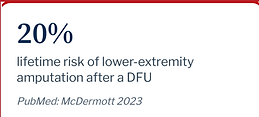
In diabetes, nerve damage (neuropathy) dulls sensation so injuries go unnoticed, while poor circulation (PAD) starves the wound of the oxygen-rich blood it needs to heal. A wound cannot close without adequate blood flow — which is why assessing and restoring circulation is the foundation of healing, not an afterthought. Diabetic foot ulcers map predominantly to CLTI Rutherford stages V–VI. Chronic Limb-Threatening Ischemia →
Why it matters



Risk Factors
-
Diabetes — longer duration and poorer glucose control
-
Peripheral neuropathy (loss of protective sensation)
-
Peripheral artery disease / poor circulation
-
A prior ulcer or amputation; foot deformity or high-pressure areas
-
Smoking, chronic kidney disease, and dialysis
Diagnostic Testing
-
Perfusion assessment — pedal ultrasound and PAT; note that ABI can read falsely normal when arteries are calcified
-
Wound assessment — depth, infection, and tissue viability
-
Angiography when revascularization is being planned
Treatment Options
Wound care & conservative therapy
-
In-house wound care from our wound-care-trained physician assistants
-
Debridement, dressings, and infection management
-
Offloading pressure; appropriate footwear
-
Glycemic control and risk-factor management
Invasive treatment
When poor circulation is slowing healing, restoring flow is what lets a wound close:
-
Below-the-knee & pedal revascularization — to reopen the arteries feeding the wound.
Circulation and wound care are coordinated in one practice — one plan focused on saving the foot.
When to call us — don’t wait for your next visit
A non-healing wound can change quickly. Call us right away — don’t wait for your next scheduled visit — if you notice any of these:
Call our office today if you notice:
-
The wound is getting larger or deeper, or draining more
-
New pain, or pain that is getting worse
-
New redness, warmth, swelling, or a foul odor — possible infection
-
New black or darkening tissue, or a new area of skin breaking down
Call our office at (918) 943-5303 and tell us what’s changed — we’ll get you seen sooner, because catching these early often keeps a small problem from becoming a big one.
Go to the emergency room now, or call 911, if you have:
-
A foot or leg that becomes suddenly cold, pale, numb, or painful
-
An infection that is spreading quickly, or a fever with a wound
Frequently asked questions
For referring providers — We work alongside podiatry and wound care, not in competition. When a wound needs better blood flow to heal, refer early — before tissue loss advances. Refer: (918) 943-5303 · fax (855) 312-3594.
Refer urgently: an infected or rapidly worsening foot, exposed tendon or bone, or wet gangrene · Routinely: any diabetic foot ulcer not improving within ~2 weeks, or a wound with cool, discolored skin or weak pulses. Full referral guide →